
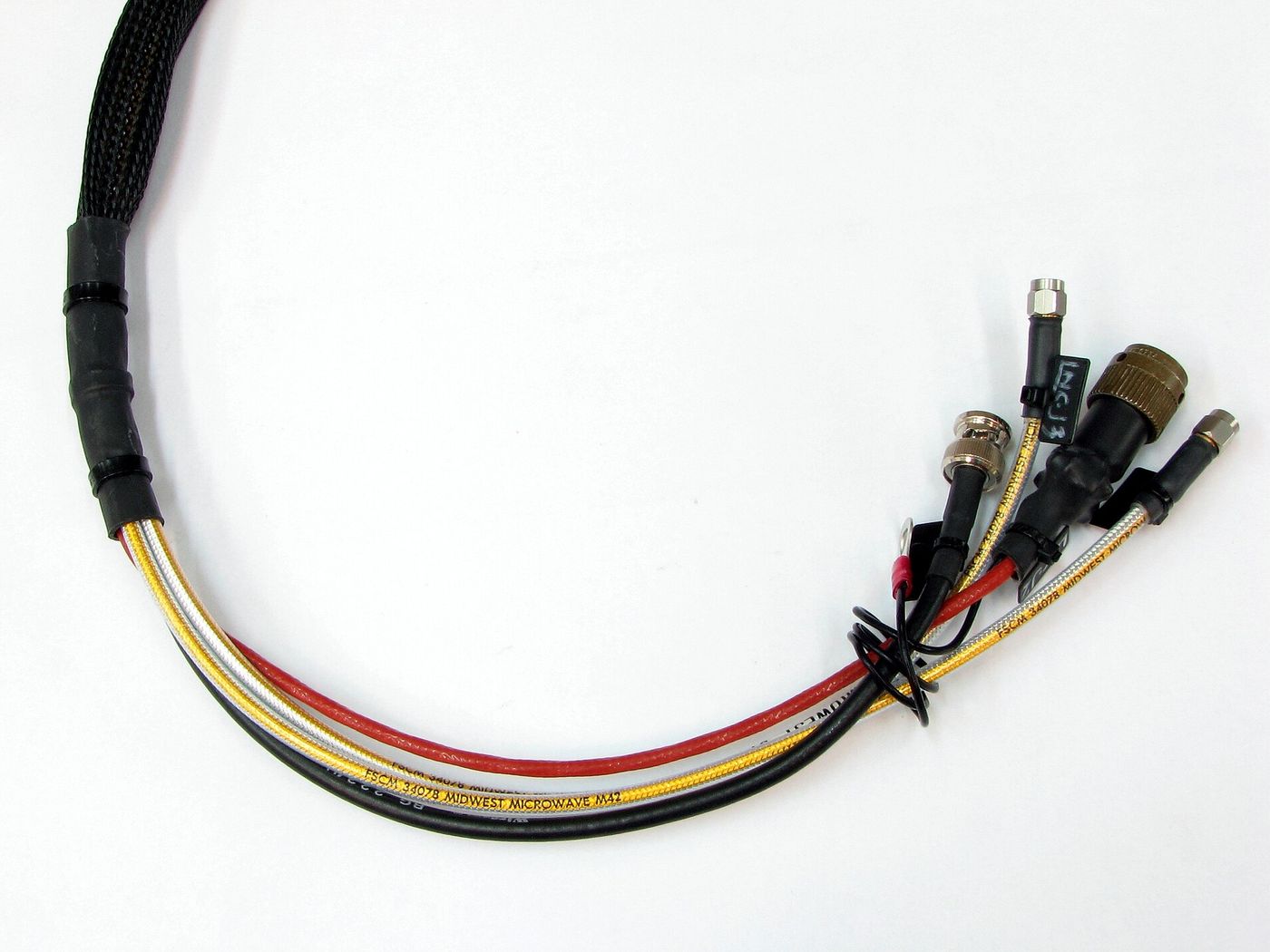
How to Choose a Cable Assembly Partner
Most cable assembly requirements arrive the same way: a drawing, a quantity and a deadline. What separates a smooth supplier relationship from a frustrating one is how the supplier handles everything around the drawing. This guide sets out what to evaluate — and what good answers look like — before you commit.
1. They ask about the drawing before quoting
A supplier who quotes instantly from a drawing without questions is either not reading it or not planning the job. Good suppliers come back with questions: which connector series the callouts refer to, what testing applies, whether materials are consigned or sourced, and what the tolerance is on critical lengths.
Questions at the start are a signal of competence, not delay.
2. They can show how they control work
Ask a prospective supplier to describe their process from receipt of drawing to delivery. Look for specific answers: how documentation is controlled, what happens at incoming inspection, which checkpoints exist during assembly, and what records exist after the job ships.
"We check everything" is not an answer. "Continuity on every assembly, hipot where the drawing calls for it, visual inspection against the drawing, records kept per job" — that is an answer.
3. Testing is agreed, not assumed
Testing should be defined before assembly begins: what is tested, against what criteria, and what happens when something fails. If the supplier's default is "we test everything" without asking what your drawing requires, keep asking.
4. Communication has a name attached
For B2B work, you want a single point of contact who knows your job — not a shared inbox where context evaporates. Ask who you will be dealing with and how status updates work.
5. Capacity and scale are stated honestly
A supplier who claims to do everything at any volume is telling you what you want to hear. Better partners state plainly what they can support, flag constraints early, and tell you when a job fits better elsewhere.
6. Documentation supports your audits
If you operate a quality system, your suppliers are part of it. Ask what documentation accompanies deliveries, and whether job records can be retrieved later — for audits, for follow-on orders, for failure analysis.
Questions worth asking any supplier
- What happens when a drawing has an ambiguity?
- What is your process for material you supply versus material we consign?
- What checks accompany a finished assembly before it ships?
- Can we see a job's records six months after delivery?
- What do you need from us to quote accurately?
If you are evaluating assembly partners, we are happy to answer every question on this list — that is what our enquiry process is for.
A ten-minute evaluation scorecard
If you are comparing several suppliers and want a quick, comparable assessment, score each candidate one to five on six statements. First: they asked questions about my drawing before quoting. Second: they described their inspection and testing in specific terms, not slogans. Third: they explained how documentation is controlled and what records exist after delivery. Fourth: a named person owns my enquiry. Fifth: constraints — quantities, timelines, capabilities — were stated plainly, including what they could not do. Sixth: their answers were consistent across email, phone and any documentation they sent.
The pattern to look for is consistency, not perfection. A supplier who scores three on testing depth but says so honestly is a better long-term partner than one who claims five and cannot describe it. Disqualify the extremes: nobody who quotes without questions, and nobody who cannot name the checks that accompany a finished assembly.
Run the scorecard on us too — that is the point of publishing it. A supplier unwilling to be measured against their own advice has told you something useful.
Key takeaways
- Questions before quoting signal competence, not delay — a quote without questions is a guess.
- Ask for a process description you could audit: documentation control, inspection points, records after delivery.
- Define testing before assembly begins, and treat "we test everything" as a prompt to keep asking.
- Insist on a named point of contact and honest statements of capacity and constraints.
- Score candidates on consistency of answers across channels, not on claims.
Putting this into practice
If you are at the evaluation stage right now, the practical next step is a short conversation: send your requirement — drawings, quantities, dates — and see how the questions and answers compare with what this article describes. The way a supplier handles your enquiry before you have committed tells you most of what you need to know about how they will handle your order after.
Keep notes as you go. Which supplier asked about the tolerance that mattered, which one volunteered a constraint without being pressed, which reply you could forward to your quality team without editing — these observations, jotted down while they are fresh, are more reliable than any brochure. And when you place the first small order, order the smallest quantity that answers your real question, because the first job is itself an evaluation: of how documentation is handled, how questions come back, and how the delivered work compares to what was agreed.
Related reading: the other articles in this hub cover cable assemblies, cable forms, RF builds, module integration and board assembly from the same buyer-side perspective. When you are ready, our enquiry page reaches us directly — technical questions included.