
Cable Forms

A cable form is a set of cables laid out and secured into a defined shape, so it installs into your product as one unit instead of a tangle of individual wires. Forms keep assemblies serviceable: routes are repeatable, breakouts land where the drawing says, and every conductor is identifiable.

Overview

What this service covers

A cable form is a set of cables laid out and secured into a defined shape, so it installs into your product as one unit instead of a tangle of individual wires. Forms keep assemblies serviceable: routes are repeatable, breakouts land where the drawing says, and every conductor is identifiable.

We build cable forms to your geometry — drawing-defined lengths, branch points and breakout positions, secured with the ties, lacing or sleeving your specification calls for.

Scope areaWhat it includes
Multi-cable bundlingGroups of cables laid up into a single, manageable form with consistent routing.
Branch points & breakoutsBreakouts positioned to your drawing, with transitions finished and protected.
Securing methodsCable ties, lacing, hook-and-loop and sleeving applied per specification.
Protective coveringsHeat-shrink, convoluted tubing and shielding as the design requires.
Length controlCritical lengths and service loops held to the tolerances your drawing specifies.
IdentificationConductor and branch marking so installation and future service work stays fast and error-free.
Configurations are confirmed at enquiry. Supported wire types, connector series, board technologies and test methods are confirmed against your specification before we quote — so what is promised is what is built.
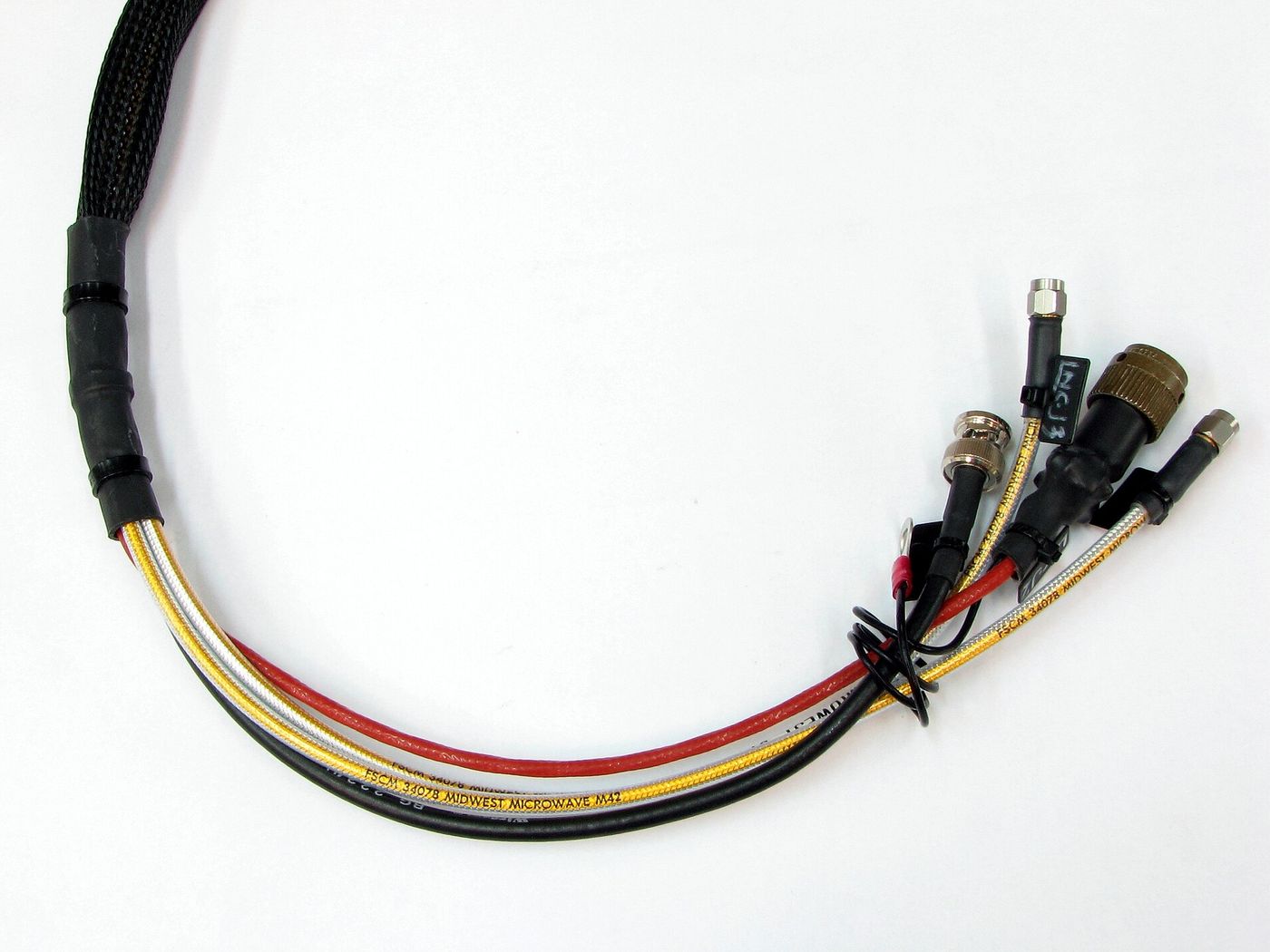
Cable form with multiple branches, ties and connectors

A well-laced form: branches land where the drawing says, conductors stay identifiable. Photo credits.

Enquire about Cable Forms

Send your drawings and requirement details — we respond with scope confirmation and next steps.

Request an Enquiry

+91 98664 65829 Email

Applications

Where cable forms are used

Typical applications for this capability — specific project experience for your application is confirmed during enquiry.

Enclosure & cabinet wiring

Forms that route inside equipment enclosures, arriving as one installable unit instead of loose wires.

Control panels

Panel wiring laid out in forms keeps dense cabinets serviceable — every conductor identifiable, every route repeatable.

Machine wiring

Forms for machines that must survive vibration and movement, with strain relief and protection at the points the design demands.

Service-friendly products

Products designed for field service benefit from forms: a technician can replace or inspect a whole form, not chase individual wires.

Buyer notes

What experience teaches about cable forms

Why lacing and layout matter

A form is a mechanical product as much as an electrical one. How it is laid up determines whether it installs cleanly, whether service loops are where they should be, and whether the form survives years of vibration. Consistent securing — ties, lacing or sleeving per specification — keeps geometry stable across production units.

Identification as a service feature

Marked conductors and labelled branches turn installation and future repairs from archaeology into procedure. Identification requirements (wire marking, branch tags, form labels) are agreed with the job documentation so the form that arrives matches what your installers expect.

Combining forms with assemblies

Many products use terminated assemblies grouped into a form — testable interconnects with the installation benefits of a shaped bundle. The two services combine naturally; tell us the installation context and we will suggest the split.

Process

How the work proceeds

Forms are built on the bench against the drawing: lengths are laid out, branches positioned, and the form secured progressively so the shape holds without stressing individual conductors. Completed forms are checked for continuity, layout and marking before packing.

STEP 1

Requirement & documentation review

Your drawings, BOM and specifications are reviewed, and questions are raised early.

STEP 2

Assembly

The job is built to the documentation by trained assemblers, following the agreed work instructions.

STEP 3

Verification & packing

Agreed checks and tests are performed and recorded; the assembly is labelled and packed for delivery.

FAQ

Technical FAQ

What is the difference between a cable form and a cable assembly?

A cable assembly is typically a finished cable with connectors — ready to plug in. A cable form is a shaped bundle of cables laid out to install into equipment, often terminated later or during installation. Many jobs combine both: assemblies grouped into a form.

Can you build forms from our existing drawings?

Yes. Forms are built to your drawings and geometry. If you have samples instead of drawings, raise that in your enquiry and we will discuss what is needed.

How are forms kept consistent across production units?

Documented layouts, defined lengths and repeatable securing methods — the form built for unit 50 is built the same way as unit 1.

Do you add connectors to the cables in a form?

Where the form specification includes terminated cables, yes — termination work follows the same build-to-print discipline as our cable assembly service.

Do you build forms for cabinet manufacturers?

Yes — cabinet and enclosure wiring is a natural fit for cable forms. Send the wiring layout or interconnect documentation and we will confirm the build scope.

Can a form include sensors or pre-terminated equipment leads?

Forms can include a mix of conductor types and pre-terminated leads where the documentation defines them. Share what the form must contain and we will confirm.

Need cable forms?

Send your drawings, specifications and quantities — we will confirm scope and next steps.